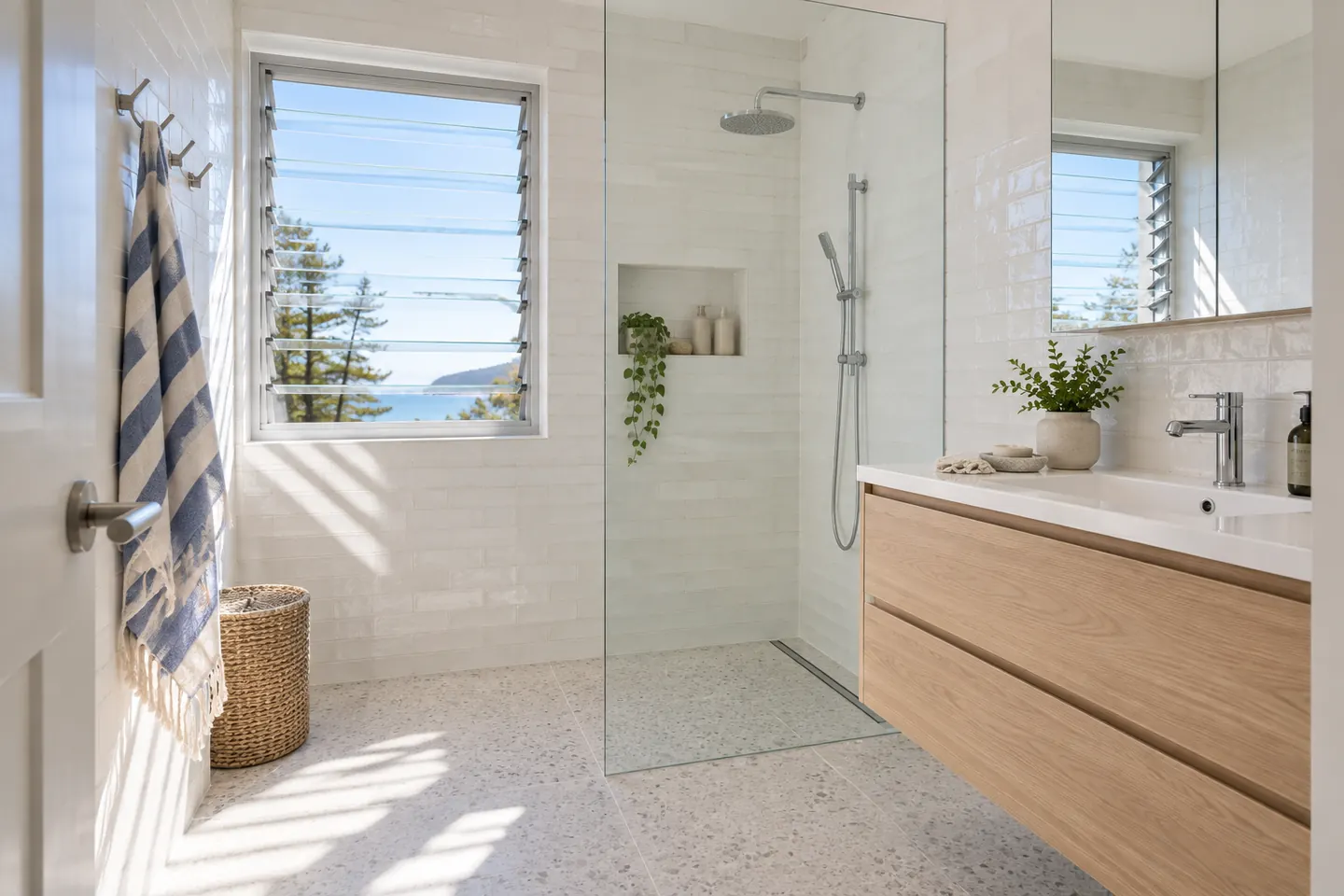
What a full renovation includes
A full bathroom renovation takes the room back to its structure and rebuilds it. Tiles, screed, linings, bath, shower, vanity and toilet all come out. New plumbing and electrical go in, followed by sheeting, a sloped screed, a waterproofing membrane, tiling and fit-off.
That sequence is the same in Cronulla as anywhere. What changes near the beach is the specification — what gets chosen for each stage — and, in units, the approvals and logistics around it.
Stage by stage, with a coastal eye
Strip-out
In houses and walk-ups built before about 1990, suspect sheeting is tested before anything is removed. If it contains asbestos, a licensed removalist takes it out first.
In a unit, strip-out is the noisiest stage and the one building managers watch most closely. Removing tiles from a concrete slab carries through the building, so it usually happens within set weekday hours. Rubbish goes out through the lift or down the stairs in bags.
Rough-in
New supply and waste connections, and wiring for lighting, exhaust and heating. Near the beach it is worth replacing old galvanised or corroded fittings while access is open, and positioning the exhaust so it pulls steam from the shower rather than just the doorway.
Sheeting, screed and waterproofing
Wet-area board to the walls, a screed with proper falls to the waste, then a membrane to the floor, shower walls and junctions. In units, this is the stage that protects the neighbour's ceiling. See shower waterproofing.
Tiling
Floor tiles with enough texture to grip when wet and sandy, and wall tiles in a light, easy-clean finish. Full-height tiling avoids painted surfaces near the shower, which blister and peel in humid, salty air. See bathroom tiling.
Fit-off
Vanity, tapware, screen, toilet, mirror, fan, lights and accessories. This is where coastal specification matters most, because these are the parts that corrode. See vanities and fittings.
Designing a beach-house bathroom
Walk-in showers suit the lifestyle. A generous shower with a fixed glass panel, no hob and no bottom track is easier to rinse sand out of than a framed enclosure. A linear drain along the wall collects water and sand cleanly.
Keep the bath if someone uses it. Families with young children and holiday lets marketed to families often still want one. Otherwise, the space is better given to the shower and storage.
Hooks beat towel rails. Wet beach towels need somewhere to hang and dry. A row of hooks or a heated rail on a timer does more than a single chrome bar.
Storage for sunscreen and swim gear. A recessed cabinet or a tall slim unit keeps the vanity top clear.
Light and airy finishes. Whites, sandy neutrals, pale timber looks and soft blues suit the light near the water and hide salt residue and sand better than dark, glossy surfaces.
Ventilation
Summer humidity and daily showers keep coastal bathrooms damp. A correctly sized exhaust fan, ducted to outside, ideally with a run-on timer, removes moisture before it condenses on cold surfaces. In older walk-ups where the fan vents into a shared shaft or has no duct at all, the building's arrangements may limit what can change, and the owners corporation may need to be consulted.
Opening the window helps, but in a unit facing a busy street or an onshore breeze, a good fan does the real work.
Houses versus units
Houses in Woolooware, Burraneer and the streets away from the beachfront allow more flexibility. Timber floors may allow waste positions to move; slab floors make that more expensive. Steep blocks near the water add carrying time. See the Burraneer page.
Units keep their waste positions in almost every case, because moving them means drilling common-property slabs. Improvement comes from the finishes, the screen, the vanity and lighting. See apartment and small bathrooms.
Holiday lets and rentals
For a bathroom that sees a new guest every few days, durability and repairability beat novelty. Choose tapware with readily available cartridges, a vanity top that shrugs off sunscreen and hair products, grout that does not stain, and a screen without fiddly seals. Plan the work for the quieter months.
What the quote should state
- Asbestos testing and how removal would be priced
- Strata requirements included, such as lift protection and restricted hours
- Tapware, screen hardware and accessories by model and finish
- Tile allowance per square metre
- Waterproofing method and cure time
- Exhaust fan model and where it discharges
- Skip or waste removal method, particularly for units
- Program in working days
In NSW, the deposit on residential building work is capped at 10 per cent, and for work over $20,000 home building compensation cover must be in place before a deposit is requested.
The builder
Renovation work is carried out in partnership with Coastal Renovation Group, a licensed NSW builder. Licence and insurance details are provided on request. The renovation costs page has 2026 bands and how we work covers the program.
Call 02 5850 4715 or send the bathroom details through.
Also by the beach
Questions people ask before they commit
How much does a full bathroom renovation cost in Cronulla?
As a 2026 guide, a house main bathroom runs about $25,000 to $40,000 and an apartment bathroom $19,000 to $32,000. Waterfront homes with larger rooms and premium selections commonly reach $40,000 to $65,000.
How long does a bathroom renovation take?
Allow around four weeks on site for a house bathroom and four to five weeks for a unit, because strata buildings usually restrict noisy work to set hours. Approval time for units comes before that.
What finishes suit a beach house bathroom best?
Textured porcelain floors that grip wet feet, light wall tiles, a moisture-resistant vanity with sealed edges, tapware and hardware with proven coastal finishes, and a frameless or fixed-panel screen without a bottom track for sand to collect in.
Is asbestos likely in Cronulla bathrooms?
In houses and units built or renovated before about 1990, it is possible. Fibro wall linings, eaves near bathroom windows and old floor underlays are the usual places. Suspect material is tested before strip-out.