What corrodes, and why
Salt carried on the onshore breeze settles on every surface near the ocean. Mixed with bathroom humidity, it attacks metals and finishes that would last for decades inland.
Common casualties in Cronulla bathrooms:
- Tapware with thin plating or low-grade alloy bodies, which pits and peels
- Shower screen hinges, clamps and brackets, which stain and seize
- Towel rails, hooks and roll holders, which rust at the fixings first
- Exhaust fan grilles and downlight trims in plated steel
- Cheap mirror cabinet hinges and drawer runners inside vanities
Tapware
What to look for
- Established manufacturers with local spare parts and published warranties
- Solid brass bodies with quality chrome, or finishes the manufacturer supports for coastal use
- Ceramic disc cartridges that can be replaced rather than the whole mixer
- Check the finish warranty — some coloured and brushed finishes have shorter or conditional coverage near the coast
Wall-mounted or bench-mounted
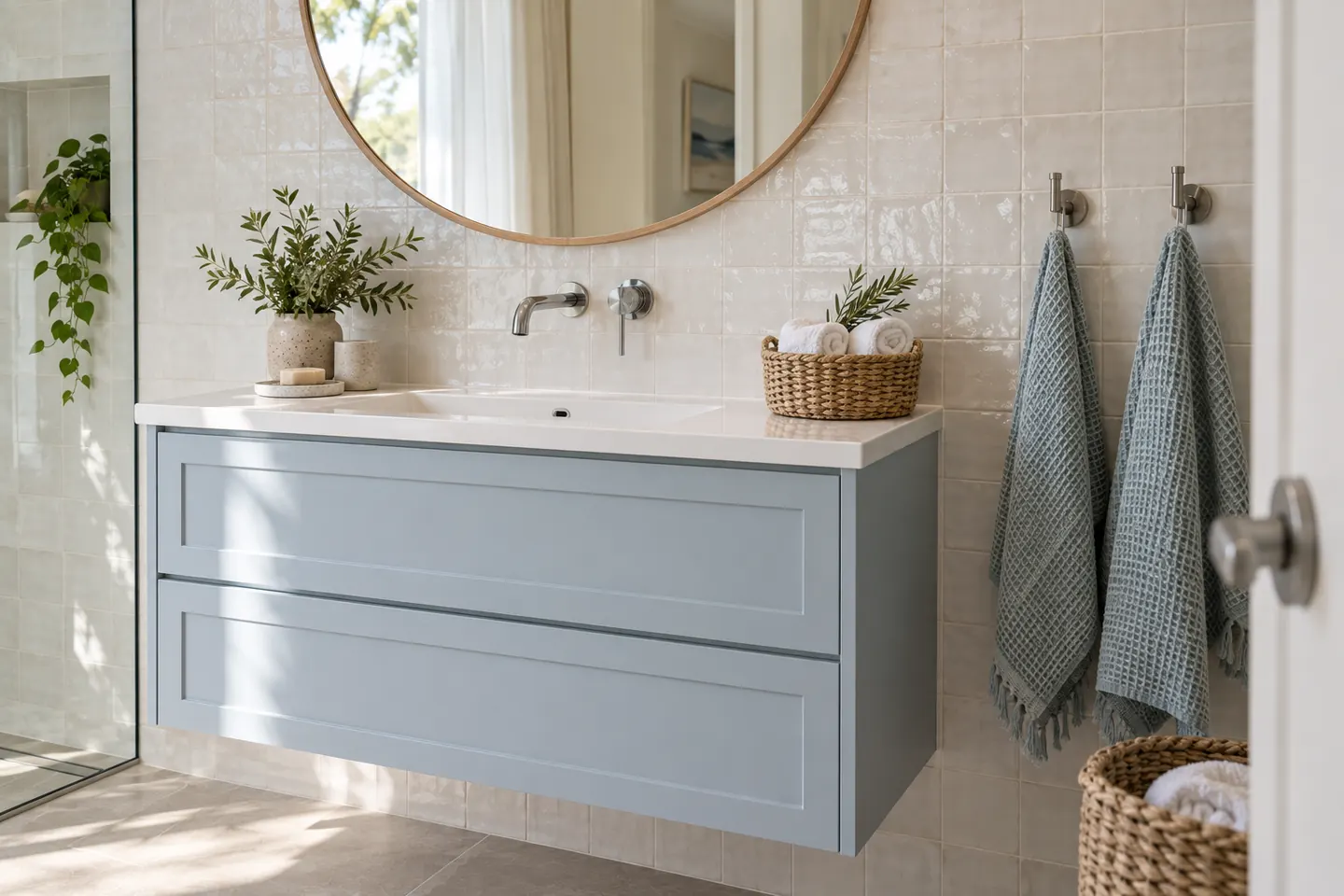
Wall-mounted basin mixers keep the vanity top clear and are easier to wipe around, which helps where sand and sunscreen accumulate. They need to be positioned at rough-in, so the vanity must be chosen first.
In rentals and holiday units
Choose models with widely available cartridges. A dripping tap should be a fifteen-minute repair, not a replacement.
Shower screens
- Frameless or fixed-panel screens have fewer metal parts and no bottom track to trap sand
- 316-grade stainless or quality brass hardware for hinges, clamps and wall channels
- Glass with a protective coating that sheds water and salt residue
- Minimal seals, since seals trap sand and grow mould
A single fixed panel with no door is the easiest screen to keep clean in a beach house.
Vanities
Materials
Beach bathrooms are humid and heavily used. A vanity needs:
- Moisture-resistant board, not standard particleboard
- Every edge sealed, including the cut-outs around pipes
- Durable finish — two-pack, thermo-laminate or quality laminate
- Quality hinges and runners that do not rust; soft-close hardware from reputable suppliers
Style
- Wall-hung vanities leave the floor clear, which makes sweeping sand easy
- Timber looks — oak, spotted gum, blackbutt tones — suit coastal homes
- Painted fronts in soft white, sage or pale blue are popular in beach cottages
- Drawers instead of doors make the whole depth usable
Tops and basins
Engineered stone has been banned in Australia since 1 July 2024. Alternatives:
- Porcelain slab: hard, stain-resistant and unaffected by sunscreen
- Solid surface with an integrated basin: seamless and easy to clean
- Compact laminate: tough and cost-effective, well suited to rentals
- Natural stone: attractive but needs sealing, and some stones mark with sunscreen and cosmetics
- Ceramic tops with integrated basins: easy clean, no joins
Mirrors and cabinets
A mirror cabinet with good internal storage keeps sunscreen, medications and toiletries off the bench. Choose cabinets with quality hinges, and consider a demister pad in a bathroom without a window. Integrated lighting at the mirror is kinder than a single ceiling downlight.
Accessories
- Hooks over rails for wet beach towels, in 316 stainless or a quality coated finish
- Heated towel rails on a timer to dry towels and the room
- Stainless or coated toilet roll holders fixed with stainless screws
- Plastic or powder-coated exhaust grilles rather than plated steel
Toilets
Wall-faced or wall-hung toilets are easier to clean around than older close-coupled designs with gaps behind. In-wall cisterns need an access panel, and the flush plate finish should be chosen with the same coastal care as the tapware.
Looking after coastal fittings
A short routine extends the life of everything metal in a beach bathroom:
- Wipe down tapware and screen hardware with a damp cloth and fresh water weekly
- Avoid abrasive and bleach-based cleaners on plated and coloured finishes
- Keep the exhaust fan running long enough to clear the room
- Rinse outdoor fittings after salt spray or storms
Exhaust fans and lighting
Two electrical items take the brunt of coastal air. Exhaust fans with metal grilles and cheap motors corrode and seize, often within a few years of a beachside install. Choose a fan with a plastic or powder-coated grille, a motor rated for humid rooms and enough extraction for the room size, ducted to outside.
Downlights and wall lights near the shower should be rated for wet areas and have trims that will not rust. A light at the mirror is worth adding at rough-in, while the walls are open, rather than trying to retrofit it later.
Choosing before the start date
Tapware positions, vanity sizes and screen dimensions all affect rough-in and tiling. Selecting every fitting before strip-out avoids delays and last-minute substitutions. The how we work page explains when each decision is needed.
The builder
Renovation work is carried out in partnership with Coastal Renovation Group, a licensed NSW builder. Licence and insurance details are provided on request. See renovation costs for 2026 bands.
Call 02 5850 4715 or send the bathroom details through.
Also by the beach
Questions people ask before they commit
Is 316 stainless steel really necessary near the beach?
For exposed hardware close to the ocean, 316-grade stainless resists corrosion noticeably better than 304-grade. It can still tea-stain if salt is left on it, so occasional rinsing with fresh water is recommended.
Which tapware finishes hold up best in coastal bathrooms?
Quality chrome over solid brass from established manufacturers performs well. Brushed, coloured and PVD finishes vary, so check the manufacturer's coastal or finish warranty. Avoid unbranded tapware with thin plating or zinc-alloy bodies.
What vanity materials suit a humid beach bathroom?
Moisture-resistant board with every edge sealed, finished in two-pack, thermo-laminate or quality laminate. Solid timber works if properly sealed. Standard particleboard with raw edges around the plumbing cut-out swells over time.